"Fix it!"
Customers do not care about our organizational chart. They don't care who's department it is...all they want is their issue taken care of.
So...we must "Fix it!" We'll worry about the details later.
(something short and sweet today...!)
Wednesday, June 25, 2014

Thursday, June 12, 2014
The Brand Called You
A few weeks ago I was asked to speak at a conference within Kroger and talk about personal branding. Since I couldn't be at the conference in person I was then asked to present via video. I decided to take a chance and create the video myself. I tried to do a white screen background first but I wasn't satisfied with the results. I just couldn't get the white background bright enough. It looked bright in the room but once on video it was too drab. So...I went to a black background.
One thing I found out while taping this...it's hard to keep your energy going without an audience to feed off of...and you think you're doing ok while you're doing it but when you watch it back you're like, "what in the world!?" (Actually, me and my daughter Brianna laughed A LOT while watching this video back)
It was fun though and while it might not be a professional video at least I can say is that I gave it a shot!
(update - I have changed the video that will be used at the conference slightly. I believe it made things flow better. I'll let you guys know what kind of response it gets!)
One thing I found out while taping this...it's hard to keep your energy going without an audience to feed off of...and you think you're doing ok while you're doing it but when you watch it back you're like, "what in the world!?" (Actually, me and my daughter Brianna laughed A LOT while watching this video back)
It was fun though and while it might not be a professional video at least I can say is that I gave it a shot!
(update - I have changed the video that will be used at the conference slightly. I believe it made things flow better. I'll let you guys know what kind of response it gets!)
Saturday, June 7, 2014
The Best Way to Win
I am reading a book about "showing off" at work. An interesting concept. I came across this passage early in the book:
The bottom line on how the world works most of the time is that the best way to get what you want is to be sure the other person is getting what they want. If you don't understand that, then you don't understand the basic fundamental operating principles of business, relationships, politics, or playground dynamics.
Showing off means finding the best way to win - which requires you to find the best way to let the other person win, too. If you doubt that this is true, I invite you to try the strategy of making the other guy lose. Do it. Make sure that whoever you're playing with loses, whether it's your coworker, spouse, child, friend, customer, vendor, or the ticket agent at the airport when your flight has been cancelled. Go for it. Make that person lose. Then see what happens, Mr. or Mrs. Tough Guy.
They won't play with you anymore. That's how it works. If you make people lose, aren't fun to play with, or just generally a pain in the ass to be around, people will stop playing with you. They will pick up their ball and go home.
I can't wait to finish the book!
"Work Like You're Showing Off - The Joy, Jazz and Kick of Being Better Tomorrow than you were Today" by Joe Calloway
The bottom line on how the world works most of the time is that the best way to get what you want is to be sure the other person is getting what they want. If you don't understand that, then you don't understand the basic fundamental operating principles of business, relationships, politics, or playground dynamics.
Showing off means finding the best way to win - which requires you to find the best way to let the other person win, too. If you doubt that this is true, I invite you to try the strategy of making the other guy lose. Do it. Make sure that whoever you're playing with loses, whether it's your coworker, spouse, child, friend, customer, vendor, or the ticket agent at the airport when your flight has been cancelled. Go for it. Make that person lose. Then see what happens, Mr. or Mrs. Tough Guy.
They won't play with you anymore. That's how it works. If you make people lose, aren't fun to play with, or just generally a pain in the ass to be around, people will stop playing with you. They will pick up their ball and go home.
I can't wait to finish the book!
"Work Like You're Showing Off - The Joy, Jazz and Kick of Being Better Tomorrow than you were Today" by Joe Calloway
Thursday, June 5, 2014
Lessons from Atticus Finch
I saw this and thought I would share it. I believe many of these lessons apply to leadership.
This is from "The Art of Manliness" blog and I'd like to thank my sister Ginny for sharing it with me. You can find it at www.artofmanliness.com
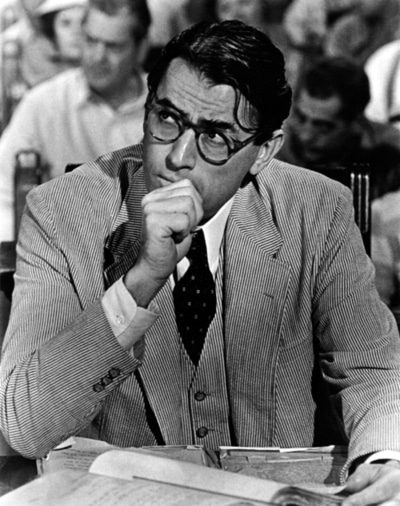
 Despite the fact that Bob Ewell “won” the case against Tom Robinson, he held a grudge against everyone who participated in the trial for revealing him as a base fool. After the trial, Ewell threatened Atticus’s life, grossly insulted him and spat in his face. In response, Atticus simply took out a handkerchief and wiped his face, prompting Ewell to ask:
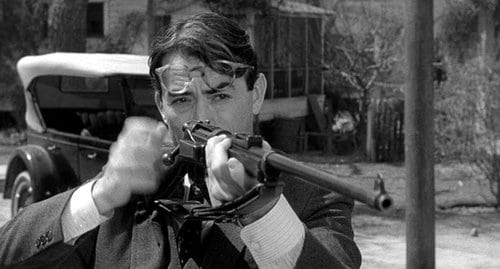
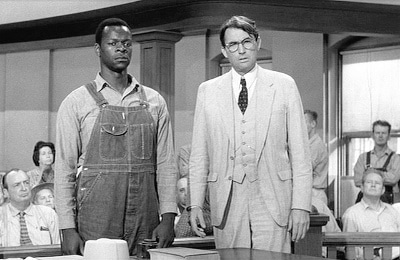 If Atticus had one dominating virtue, it was his nearly superhuman empathy. Whenever his children felt angry at the misbehavior or ignorance of the individuals in their town, he would encourage their tolerance and respect by urging them to see the other person’s side of things:
 Atticus is probably best remembered as an exemplary father. As a widower he could have shipped his kids off to a relative, but he was absolutely devoted to them. He was kind, protective, and incredibly patient with Jem and Scout; he was firm but fair and always looking for an opportunity to expand his children’s empathy, impart a bit of wisdom, and help them become good people.
This is from "The Art of Manliness" blog and I'd like to thank my sister Ginny for sharing it with me. You can find it at www.artofmanliness.com
Lessons in Manliness from Atticus Finch
When it comes to manly characters in literature, my thoughts always return to one man:
Atticus Finch.
Perhaps this character from To Kill a Mockingbird seems like an unusual choice. A gentleman in a three piece suit. A widower of two kids, Jem and Scout. A man who was quiet instead of brash. Polite instead of macho. A lawyer who used his mind instead of his fists, who walked away from insults. Who didn’t gamble or smoke, who liked to walk instead drive. A man who liked nothing better than to bury himself in a book. Yes, Atticus may not seem very “manly,” at least when measured by the modern rubric for manliness.
But it is the subtlety of his manliness, the way he carried himself, taught his children, made his choices, that makes his manliness all the more real, all the more potent. His manhood was not displayed in great showy acts but in quiet, consistent strength, in supreme self-possession. The manliness of Atticus Finch does not leap off the page; instead, it burrows its way inside of you, sticks with you, causes your soul to say, “Now that is the kind of man I wish to be.”
The examples of honorable manhood that can be wrung from To Kill a Mockingbird are plentiful and powerful, and today we’d like to explore just a few.
Lessons in Manliness from Atticus Finch
A man does the job no one else wants to do.
To Kill a Mockingbird unfolds against the backdrop of Atticus’s representation of Tom Robinson. Robinson, a black man, has been accused by Mayella Ewell, a white woman, of rape. While Atticus is assigned to be Robinson’s public defender by a judge, he earns the townspeople’s ire in his determination to actually defend him, honorably and fairly, to the best of his abilities.
He does the job that must be done, but that other people are unwilling and afraid to do.
Indoors, when Miss Maudie wanted to say something lengthy she spread her fingers on her knees and settled her bridgework. This she did, and we waited.“I simply want to tell you that there are some men in this world who were born to do our unpleasant jobs for us. Your father’s one of them.”“Oh,” said Jem. “Well.”“Don’t you oh well me, sir,” Miss Maudie replied, recognizing Jem’s fatalistic noises, “you are not old enough to appreciate what I said.”
A man stands in the gap and does what must be done. Doing so earns the respect even of one’s most ardent critics; after facing a myriad of taunts and threats from his neighbors for his defense of Tom Robinson, Atticus is once more re-elected to the state legislature …unanimously.
A man lives with integrity every day.
In Maycomb County, Atticus was known as a man who was “the same in his house as he is on the public streets.” That was the standard he lived by. He did not have one set of morals for business and one for family, one for weekdays and one for weekends. He was incapable of doing anything that would broach the inviolable sanctity of his conscience. He made the honorable decision, even when that decision was unpopular.
“This case, Tom Robinson’s case, is something that goes to the essence of a man’s conscience-Scout, I couldn’t go to church and worship God if I didn’t try to help that man.”“Atticus, you must be wrong…”“How’s that?”“Well, most folks seem to think they’re right and you’re wrong…”“They’re certainly entitled to think that, and they’re entitled to full respect for their opinions,” said Atticus, “but before I can live with other folks I’ve got to live with myself. The one thing that doesn’t abide by majority rule is a person’s conscience.”
Atticus understood that a man’s integrity was his most important quality-the foundation upon which his honor and the trust of others was built. Stripped of integrity, a man becomes weak and impotent, no longer a force for good in his family or community.
“If you shouldn’t be defendin’ him, then why are you doin’ it?”“For a number of reasons,” said Atticus. “The main one is, if I didn’t I couldn’t hold up my head in town, I couldn’t represent this county in the legislature, I couldn’t even tell you or Jem to do something again.”“You mean if you didn’t defend that man, Jem and me wouldn’t have to mind you any more?”“That’s about right.”“Why?”“Because I could never ask you to mind me again. Scout, simply by the nature of the work, every lawyer gets at least one case in his lifetime that affects him personally. This one’s mine.”
The most important form of courage is moral courage.
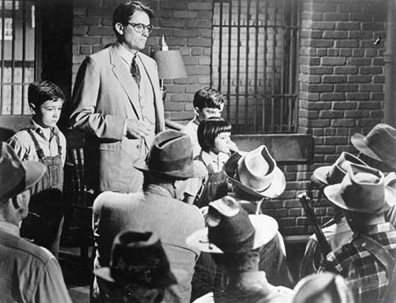
There are different types of courage: physical, intellectual, and moral.
While unassuming, Atticus certainly possessed physical courage; when Tom was in jail, he sat outside all night reading and faced down an angry mob intent on lynching the prisoner.
But moral courage is arguably the most important type of bravery, and this Atticus had in spades. Moral courage involves the strength to stick with your convictions and do the right thing, even when the whole world criticizes and torments you for it. Atticus’s decision to represent Tom Robinson brought a slew of insults and threats to him and his family. But he was willing to bear the onslaught with head held high.
Moral courage also supplies the fortitude to take on a fight you know you’ll lose, simply because you believe the cause to be honorable. Atticus knows that he will lose his defense of Tom Robinson. When Scout asked him why he continued to press on, Atticus answered:
“Simply because we were licked a hundred years before we started is no reason for us not to try to win.”
Atticus used the example of Mrs. Henry Lafayette Dubose to teach Jem the power of this kind of moral courage.
Mrs. Dubose was a sick, cantankerous old woman who would berate Jem and Scout whenever they passed by her house. Jem tried to heed his father’s counsel to be a gentleman, but finally snapped one day and tore up her flower beds. As punishment, Atticus made Jem read books to Mrs. Dubose every day after school. She hardly seemed to pay attention to his reading, and he was relieved when his sentence finally ended.
When Mrs. Dubose died soon afterwards, Atticus revealed the true nature of Jem’s assignment. She had been a morphine addict for a long time, but wanted to overcome that addiction before she left the world; Jem’s reading had been a distraction as she worked to wean herself from the drug. Atticus explained to Jem:
“Son, I told you that if you hadn’t lost your head I’d have made you go read to her. I wanted you to see something about her-I wanted you to see what real courage is, instead of getting the idea that courage is a man with a gun in his hand. It’s when you know you’re licked before you begin but you begin anyway and you see it through no matter what. You rarely win, but sometimes you do. Mrs. Dubose won, all ninety-eight pounds of her. According to her views, she died beholden to nothing and nobody. She was the bravest person I ever knew.”
Live with quiet dignity.
Despite the fact that Bob Ewell “won” the case against Tom Robinson, he held a grudge against everyone who participated in the trial for revealing him as a base fool. After the trial, Ewell threatened Atticus’s life, grossly insulted him and spat in his face. In response, Atticus simply took out a handkerchief and wiped his face, prompting Ewell to ask:
“Too proud to fight, you nigger-lovin’ bastard?”
“No, too old,” Atticus replied before putting his hands in his pockets and walking away.
It’s often thought that the manly thing to do is answer tit for tat. But it can take greater strength to refuse to sink to another man’s level and to simply walk away with dignity. Frederick Douglass said, “A gentleman will not insult me, and no man not a gentleman can insult me.” This was a credo Atticus lived by.
Atticus’s quiet dignity was also manifested in his authentic humility.
At one point in the book, Jem and Scout feel disappointed in their father; at 50, he is older and less active than the dads of their peers. He doesn’t seem to know how to do anything “cool.” This opinion is transformed when Atticus takes down a rabid dog with a single bullet, and they learn that their father is known as the “deadest shot in Maycomb County.” Jem becomes duly impressed with his father for this display of skill, all the more so because Atticus had never felt the need to brag about his prowess.
“Atticus is real old, but I wouldn’t care if he couldn’t do anything-I wouldn’t care if he couldn’t do a blessed thing.”Jem picked up a rock and threw it jubilantly at the carhouse. Running after it, he called back: “Atticus is a gentleman, just like me!”
Cultivating empathy is paramount.
If Atticus had one dominating virtue, it was his nearly superhuman empathy. Whenever his children felt angry at the misbehavior or ignorance of the individuals in their town, he would encourage their tolerance and respect by urging them to see the other person’s side of things:“If you can learn a simple trick, Scout, you’ll get along a lot better with all kinds of folks. You never really understand a person until you consider things from his point of view—until you climb into his skin and walk around in it.”
Atticus understood that people could only be held responsible for what they knew, that not everyone had an ideal upbringing, that folks were doing they best they could in the circumstances in which they found themselves. Atticus strove above all to see the good in folks and to figure out why they did the things they did.
When Scout complained about her teacher embarrassing a poor student, Atticus got her to see that the teacher was new in town and couldn’t be expected to know the background of all the children in her class right away. When a poor man that Atticus had helped with legal problems showed up in the mob to hurt him and lynch Tom, Atticus defended him, explaining that he was a really good man who simply had some blind spots and got caught up in the mob mentality.
Even when Bob Ewell spit in his face, he responded with empathy:
“Jem, see if you can stand in Bob Ewell’s shoes a minute. I destroyed his last shred of credibility at that trial, if he had any to begin with. The man had to have some kind of comeback, his kind always does. So if spitting in my face and threatening me saved Mayella Ewell one extra beating, that’s something I’ll gladly take. He had to take it out on somebody and I’d rather it be me than that houseful of children out there. You understand?”
Teach your children by example.
Atticus is probably best remembered as an exemplary father. As a widower he could have shipped his kids off to a relative, but he was absolutely devoted to them. He was kind, protective, and incredibly patient with Jem and Scout; he was firm but fair and always looking for an opportunity to expand his children’s empathy, impart a bit of wisdom, and help them become good people.“Do you defend niggers Atticus?” I asked him that evening.“Of course I do. Don’t say nigger, Scout. That’s common.”“’s what everybody else at school says.”“From now on it’ll be everybody less one.”
As a father he let his kids be themselves and nurtured their unique personalities. During a freak snowstorm in Alabama, Jem, determined to build a snowman from the scant snow on the ground, hauled a bunch of dirt from the backyard to the front, molded a snowman from the mud, and then covered the mudman with a layer of snow. When Atticus arrived home, he could have been angry with the kids for messing up the lawn, but instead, he was pleased with Jem’s enterprising creativity.
“I didn’t know how you were going to do it, but from now on I’ll never worry about what’ll become of you, son, you’ll always have an idea.”
Atticus’s sister wished that tomboy Scout would wear dresses, play with tea sets, and be the “sunshine” for her father; she often hurt Scout’s feelings with her disparaging remarks. But when Scout asked her father about this criticism:
He said there were already enough sunbeams in the family and to go about my business, he didn’t mind me much the way I was.
And he bought her what she wanted for Christmas-an air rifle.
Most of all, Atticus taught Jem and Scout by example. He was not only always honest with them, he was honest in everything he did himself.
He not only read them the newspaper each evening, but modeled a love of reading himself. And as a result, his kids devoured every book they could get their hands on. (Modern studies actually bear the truth of this out; kids with fathers who read are more likely to read themselves).
And he not only taught his children to be courteous, he was a model of courtesy and kindness himself, even to prickly types like Mrs. Dubose:
When the three of us came to the house, Atticus would sweep off his hat, wave gallantly to her and say, “Good evening, Mrs. Dubose! You look like a picture this evening.”I never heard Atticus say like a picture of what. He would tell her the courthouse news, and would say he hoped with all his heart she’d have a good day tomorrow. He would return his hat to his head, swing me to his shoulders in her very presence, and we would go home in the twilight. It was times like these when I thought my father, who hated guns and had never been to any wars, was the bravest man who ever lived.
Sunday, June 1, 2014
Friday, May 30, 2014
Stanley McChrystal: Listen, learn ... then lead
This was sent to me by Derek R. Pangelinan, a Training Specialist with Fred Meyer. It shows how leadership changes - even in the military.
Wednesday, May 28, 2014
Quarter-Life Crisis
I was listening to a radio show the other morning and they were discussing the disillusionment of people in their 20s who were having "quarter-life crisis." It actually made me sad to listen to those calling into the show and those in the studio who were involved in a quarter-life crisis. Now in the spirit of full-disclosure I have never been depressed and as far as I know have never really even had a moment of depression so perhaps I am not the best person to comment on this but I will anyway.
I was sad because I see life as a wonderful, wondrous thing...always have.
I think I have a solution for those experiencing a quarter-life crisis...
Go to a "third-world" country
I suggest this because my wife and two children are in Ethiopia right now. They will be there all summer. They are in the village that my wife grew up in...the town of Woreta. I was there four years ago and will be going later this summer. It is a place of poverty but you wouldn't know it by visiting and talking with the people. Some literally have nothing but the clothes on their backs and a little hut with some blankets but they invite you in and offer to share their warmth and smiles.
It is absolutely amazing!
After listening to the radio show I asked my wife if people are depressed in Ethiopia. She said people are too busy trying to survive to be depressed.
She said they may be depressed but they can't let it stop them from taking action or they would die.
Wow
How can we, in the land of plenty, feel as if we have nothing? How can our young men and women feel like they are going through a quarter-life crisis?
Perhaps we can learn from those who really have nothing in the way of material possessions...
Share our warmth and smiles...
I was sad because I see life as a wonderful, wondrous thing...always have.
I think I have a solution for those experiencing a quarter-life crisis...
Go to a "third-world" country
I suggest this because my wife and two children are in Ethiopia right now. They will be there all summer. They are in the village that my wife grew up in...the town of Woreta. I was there four years ago and will be going later this summer. It is a place of poverty but you wouldn't know it by visiting and talking with the people. Some literally have nothing but the clothes on their backs and a little hut with some blankets but they invite you in and offer to share their warmth and smiles.
It is absolutely amazing!
After listening to the radio show I asked my wife if people are depressed in Ethiopia. She said people are too busy trying to survive to be depressed.
She said they may be depressed but they can't let it stop them from taking action or they would die.
Wow
How can we, in the land of plenty, feel as if we have nothing? How can our young men and women feel like they are going through a quarter-life crisis?
Perhaps we can learn from those who really have nothing in the way of material possessions...
Share our warmth and smiles...
Subscribe to:
Posts (Atom)